
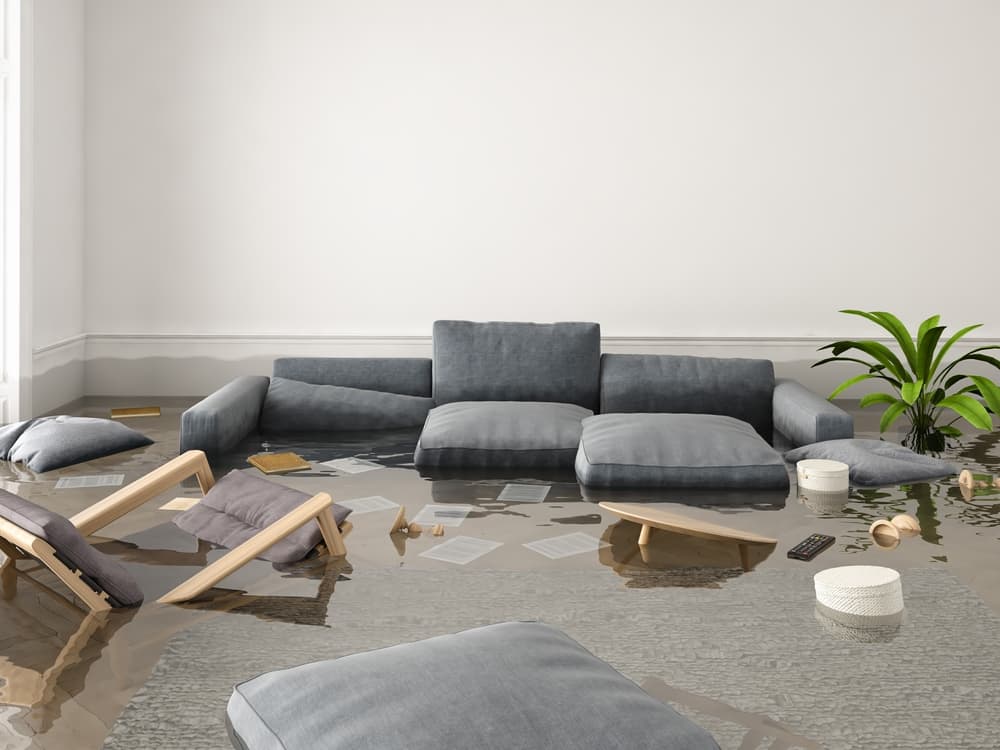
Classes of water loss describe the amount of water and the projected rate of evaporation based on the amount and type of wet materials in your home or business. There are four classes of water loss. Keep in mind, this is different from the three categories of water damage for insurance companies .
Class 4: Specialty Drying Situations
Class 4 water losses are caused by major water damage, like a severe flood. This classification can have devastating consequences for your property, affecting the structure. With a high level of water present, special care should be taken with drying; the process may take longer than what other classifications require. This class of water loss includes materials with low porosity, including:
- Plaster
- Concrete
- Rock
- Crawlspaces
- Hardwood
Class 3: Fastest Rate of Evaporation
Class 3 water losses typically come from overhead, saturating areas such as:
- Insulation
- Ceilings
- Walls
- Carpet
- Cushions
- Subfloor (in almost the entire area)
Class 2: Fast Rate of Evaporation
Class 2 water losses affect the whole room through materials such as carpets and cushions. Class 2 is identifiable if the whole room has been affected, and the rate of water evaporation is fast. Notably, water in this classification has wicked up the walls no more than 24 inches. In class 2 water losses, the following materials may be severely wet:
- Wood grained material
- Flooring
- Carpets
- Furniture
Repairing class 2 water damage may cost more than class 1 since the affected area is larger. It may also be more difficult to clean.
Class 1: Slow Rate of Evaporation
Class 1 water losses affect only a certain portion of a room through low-permeance or low-porosity materials. This may include materials such as:
- Vinyl composition tile
- Plywood
- Structural wood
- Concrete
- Particle board
Class 1 is typically the easiest to handle because it only covers a small area. The damage created here is generally minimal, and the affected items have absorbed only a small amount of water. The cost of repairs is also inexpensive, making a class 1 water loss the best-case scenario.
- Emergency Contact , where a specialist will ask certain questions to determine the type and scope of loss, and dispatch appropriate personnel and equipment.
- Water Removal , where water is removed using specialized pumps and extraction equipment.
- Damaged Material Removal , where non-restorable items are removed from the property to ensure efficient drying of remaining property and materials.
- Drying , where special drying equipment is used to extract water you can’t see out of materials. This occurs after most of the water has already been removed. Oftentimes, this equipment is placed on technicians’ first visit to begin the drying process as quickly as possible.
- Repairs and Construction , where construction services and other needs are addressed following water removal and cleanup.
For more information, visit our FAQ and Glossary .
Sources:
https://www.neti.education/wp-content/uploads/2015/07/Category-of-Loss-and-Class-Descriptions-IICRC-S520.pdf https://www.francophoniecanadienne.ca/categories-and-classes-of-water-loss/