
Whether you’ve survived a leaky roof or faulty pipe, the aftermath of water damage can leave a lingering odor. That mildew smell can ruin a new restoration or even be a sign that there are still potential hazards in the home. To help you get that mildew smell out of the house, our team compiled all of their top tips and information.
How to Get Rid of Mildew Smell
Getting rid of mildew smells can be easier said than done. Traditional air fresheners or sprays may mask the smell for a moment, but it’s not a permanent solution. In some cases, you may be able to resolve the issue on your own. For example, if clothes are left in the washer too long and develop a strong smell, rerun the wash cycle and dry immediately. But it’s always best to ask for professional help in more severe cases.
Step One: Identify the Source
What does mildew smell like? Can you see it? How do you find where the smell is coming from? These are all critical questions to ask when you first notice a strong odor in your home. To guide a professional’s assessment of your home, gather some initial facts for the project manager:
• Recent events : any number of things can cause a strong mildew smell in the home. Water damage, bacteria, or trapped pets can all cause an unpleasant odor. Think back on what’s been happening lately at home. Could a recent storm be the cause? Have you been having trouble with faulty pipes? Has your humidifier been working correctly? This information helps a professional know where to start regarding their assessment.
• Smell : mildew and mold create pungent, stale, and musty smells. Assess where you think the odor is coming from, whether it’s located in the living room or bathroom. Keep in mind that inhaling these smells can be dangerous. Do not compromise your health to identify the odor's source.
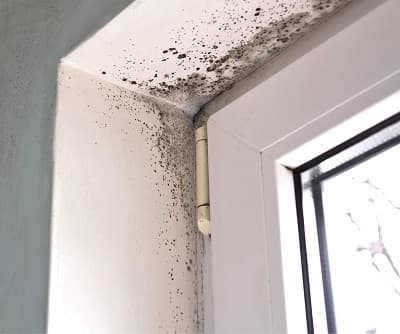
• Visual manifestations : as mentioned earlier, mildew often has a white, gray, or brown color. Unlike mold, which can become fuzzy, mildew is flat and spreads on top of the infected surface. According to the CDC, mildew thrives in moist environments, so check windows, shower walls, sinks, and other places where water is prevalent.
Step Three: Minimize the Smell (While You Wait)
First and foremost, recent studies from the Centers for Disease Control (CDC) and World Health Organization indicate that exposure to mold and mildew can sometimes cause health effects. If possible, stay near fresh air and avoid the infected space to help reduce potential injury or sickness.
As mentioned, you can use air fresheners to mask the smell, but this isn’t a long-term solution. If you don’t know how to get rid of mildew, then you shouldn’t try and address the issue yourself—just do what you can to maintain your and your family’s safety while you wait for help.
Step Four: Professional Odor Removal
- Removing the odor source: any remediation or restoration will be in vain if the primary source for the odor is still present.
- Clean residues from surfaces: this step involves a system of sanitizing, deodorizing, and cleaning to remove the particles causing the smell.
Sources:
https://www.epa.gov/mold/what-does-mold-smell
https://www.epa.gov/mold/what-difference-between-mold-and-mildew
https://www.cdc.gov/mold/faqs.htm
https://housemethod.com/maintenance/mold-vs-mildew/
https://www.cdc.gov/mold/control_mold.htm
https://www.hgtv.com/design/remodel/interior-remodel/mold-vs-mildew