
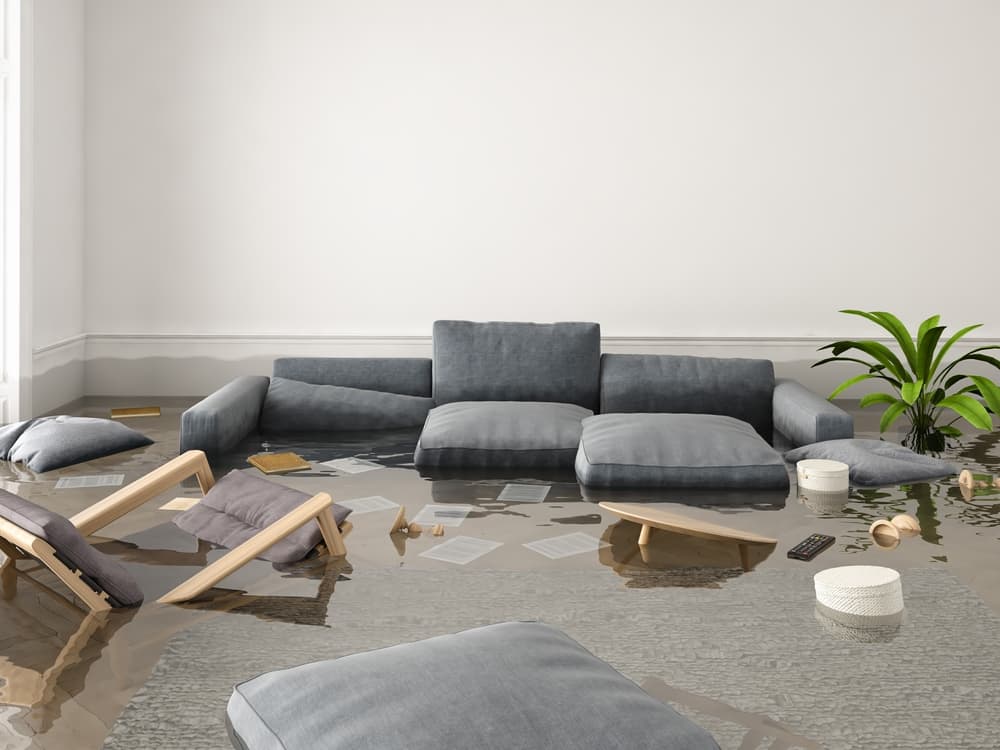
For some, the basement is a sanctuary. Finished or unfinished, basements can be havens for sleepovers, games, cool temperatures in the summer, or, frequently, a place for storage. Regardless of how you use your basement, the last thing you want is to head downstairs and see water everywhere. So, what are some common causes of basement flooding, and how can you help avoid it?
Most Common Reasons for a Flooded Basement
According to State Farm and Forbes, here are five reasons why your basement floods:
- Surface water leaking into basement. Sometimes, surface water can drain down foundation walls. Look for these potential culprits:
- Overflowing gutters. Make sure gutters are regularly inspected and cleared of debris, especially if you live in an area with lots of trees.
- Clogged downspouts.
- Downspout distance. State Farm indicates that downspouts should extend 10 feet from your property to help ensure water runoff is directed away from your foundation.
- Pavement slope. Over time, the gradient of pavement can change. If possible, remove and replace pavement that has changed slope or settled toward your home, instead making sure water is directed away from the foundation.
- Landscape slope. Your yard or land should slope away from your home. If it doesn’t, or you find depressions in the ground near the foundation, fill them in with dirt.
- Clay-type soil is advised, as it will encourage the water to drain away from the house, whereas sandy soil will soak in the water like a sponge. State Farm advises at least eight inches between the top of the grass or dirt, and any wood or stucco of your home.
- Consider having a civil engineer analyze your property and offer recommendations, especially if you have large hills nearby that slope toward your home.
- Sealant. Because sealant can crack over time due to improper installation and/or age, consider removing and replacing it. This applies especially to sealant around pavement which borders your home.
- Irrigation. If possible, do not place lawn irrigation tools (like sprinklers) right next to your home. If this can’t be avoided, ask the installer to try limiting how much water is dispersed by the home. Additionally, consider installing a rain gauge with the irrigation tool, so it either won’t water, or will water minimally, if it has already rained.
- Hydrostatic pressure caused by groundwater. Specifically, check for the following:
- Groundwater. If you spot water coming up through your concrete basement floor, or water leaking in at multiple locations (often through hairline cracks), this may be a sign that subsurface groundwater under hydrostatic pressure is at fault.
- Location of the drain system.
- There are two types of drain systems: Perimeter above slab-gutter, and below-slab perimeter drainage. A perimeter above slab-gutter system is installed above, at the base of exterior foundation walls. The idea is that it doubles as base material for the wall itself. Conversely, a below-slab perimeter drainage system is installed after partial removal of the concrete floor slab, followed by installation of the drainage pipe. This type of drainage system tends to be more expensive than above slab-gutter systems.
- Ultimately, an under-floor drainage system may be an ideal choice because under-floor drains relieve hydrostatic pressure. (This occurs before the water reaches the bottom of the floor slab.)
- Backup of storm sewer water from the municipal storm sewer system. If your house is older and does not have a sump pump, instead utilizing a perimeter drain system, storm sewer water may back up toward your house, causing leaks or serious flooding.
- Clog in the municipal or home sanitary sewer line. While this cause is largely out of your control, consider installing backflow preventers to lessen the chance of city sewer water flowing backward into your house. Additionally, pour safe tree root killer down your toilets once a year. Clogged sewer lines are typically caused by tree roots, grease, waste, saturated ground, broken pipes, vandalism, and/or obtrusive items dropped down manholes, which plug individual service lines. Installing backflow preventers may help mitigate your chances of sewage backing up into your basement.
- Inclement weather , such as severe thunderstorms, hurricanes, or floods, which can cause water to rush in or leak into your basement through vulnerable openings or hairline cracks in the foundation.
How to Help Prevent Water Damage in Your Basement
Forbes and State Farm offer a variety of tips to help prevent water damage in your basement or other areas of your home or business :
- Check hoses and faucets . Disconnect hoses from faucets when it gets cold out, since sitting water will freeze in cold weather, expand, and may burst inside the hose. This could partially or fully obstruct water flow.
- This includes hoses leading to home appliances such as refrigerators and washing machines.
- Clean gutters and downspouts to help prevent blockage from debris. Water should flow freely through gutters and downspouts.
- Keep trees trimmed . If possible, keep trees at least 20 feet away from drainage and piping.
- Look for leaks, mold, and cracks in and around toilets, sinks, washing machines, showers, and water heaters.
- Monitor water pressure . If water pressure is too high, it can cause pipes to fail. Consider purchasing a water pressure gauge from your local hardware store and using it on your faucet (turn the faucet on fully to test).
- If water pressure is more than 100 psi, a pressure regulator may be needed.
- Watch your water bill . A spike or unusual activity in your water bill may indicate a leak or issue.
- Know how to shut off the main water . Shutting this off is recommended if you intend to leave your home for an extended period.
- Inspect the roof and chimney for signs of damage that may lead to leaks.
- Install water alarms in basements or other vulnerable areas, such as kitchens, bathrooms, and laundry rooms.
- Add or update drainage . This may include adding or updating your gutters and downspouts.
- Install a sump pump and test twice a year (or according to manufacturer guidelines).
- Replace your pipes . State Farm indicates most home piping has a lifespan of 50-80 years.
- PVC pipes may need replaced every 25-40 years. When in doubt, have a plumber inspect your pipes.
- Install a water leak detection system , such as an automatic shutoff valve that “turns on” when it detects water on the floor or odd flow in a pipe.
- Update your windows and doors .
- This includes potentially re-sealing cracks in trim, as well as re-painting, inspecting, and cleaning older windows regularly. The glazing compound may need replaced, too. When buying new windows, look for ones with watertight options.
- Seal your basement .
- Consider using paint and silicate-based sealers with a thick coating.
- Replace your washing machine supply hoses every three to five years.
- Water Removal. In the third step, powerful extraction units and pumps are used to thoroughly extract the water.
- Cleaning, Sanitizing, and Deodorization. Various techniques, specially formulated products, and elite equipment are used during the cleaning, drying, and deodorization processes. This may involve services such as carpet or furniture cleaning , or floor, wall, and ceiling cleaning .
- Drying. Generally, during the technicians’ first visit, industry-leading drying equipment is placed to begin the drying process. The goal is to remove water you can’t see, returning items to their typical moisture level. The amount and type of drying equipment placed depends on the specific needs of your unique water damage situation.
- Repairs and Construction. The final step involves any final repairs, which can range from minor fixes to major reconstruction of certain areas or entire rooms.
Sources:
https://www.forbes.com/home-improvement/home-emergencies/basement-flooding-who-to-call/
https://www.forbes.com/home-improvement/interior/ways-to-prevent-water-damage/
https://www.statefarm.com/simple-insights/residence/flooded-basement-common-causes