
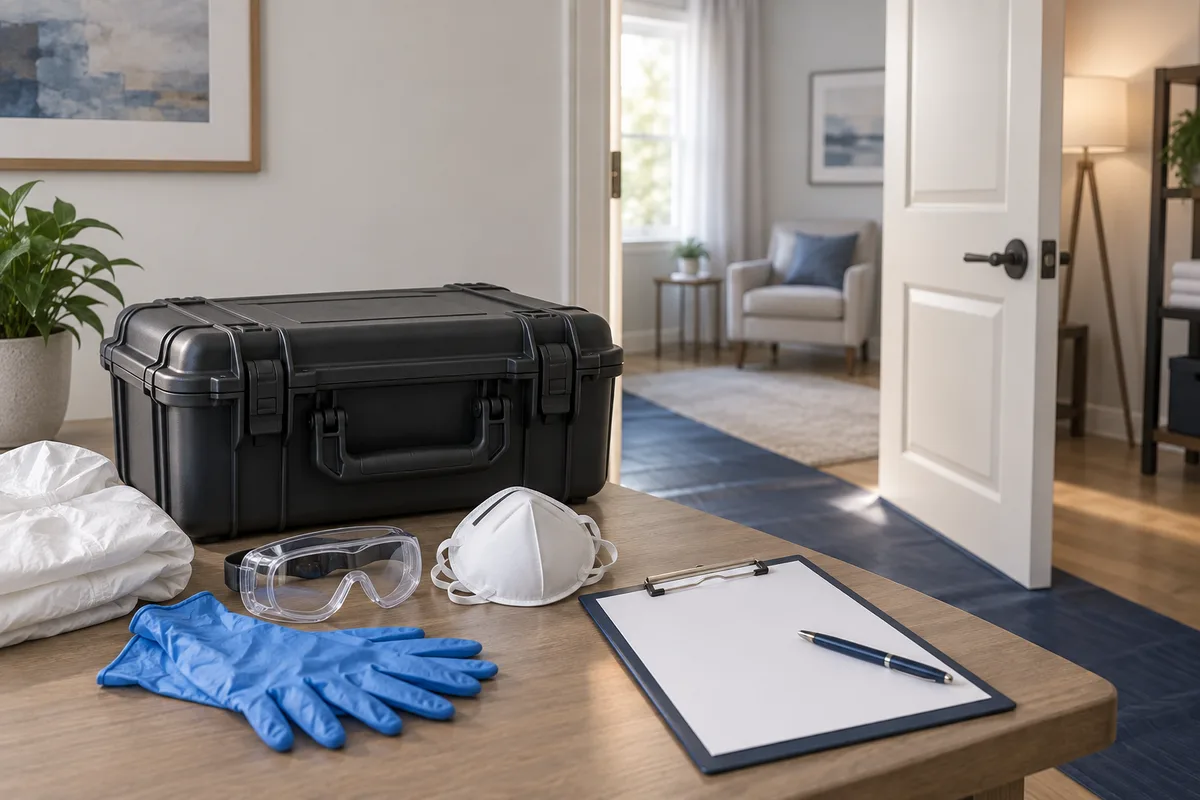
After a traumatic event, property owners may need help organizing access, cleanup and repairs while protecting the privacy of the people involved. Trauma and crime scene cleanup requires an assessment of the actual conditions; it is separate from an investigation by emergency responders or law enforcement.
Confirm that the scene has been released
Wait for the responsible authorities to release the area before arranging access for cleanup. A release allows the next stage to be organized; it does not certify that surfaces are clean or that the building is ready for normal use. Keep family members, tenants and pets away from the affected area until access has been addressed with the appropriate provider.
For an active emergency, leave the area and call 911. Do not move evidence, unknown substances or affected belongings to prepare for a cleaning visit.
Define the conditions that need assessment
Tell the provider which rooms are involved and what information the authorities have supplied. Different events can leave different materials, including biological material, investigation residues or damage from emergency access. Each concern needs its own evaluation. A stain on a hard surface and material retained in carpet or wall layers may lead to different decisions.
The OSHA information on bloodborne-pathogen worker protections explains why relevant work requires appropriate exposure controls. Household cleaning supplies alone do not establish that a person is prepared to perform this work.
Agree on a written cleanup scope
Ask the prospective provider to identify the areas and materials included, access restrictions, proposed handling of affected contents and how completion will be documented. Confirm the qualifications and any specialist involvement appropriate to the actual incident. Do not assume that every company offering general cleaning performs every type of trauma or hazardous-material cleanup.
- Name one authorized contact for access and decisions.
- Identify belongings that require individual assessment before removal.
- Clarify who authorizes disposal and what inventory will be retained.
- Separate cleanup from plumbing, electrical, structural and finish repairs.
- Agree how unexpected findings and additional work will be approved.
Protect privacy and keep practical records
Share only the information needed to arrange the assessment. Avoid sending graphic photographs through a general service form. Keep authorization, inventory, estimates and completion records together, and ask your insurer what documentation it needs if a claim is involved. Coverage and payment decisions remain separate from the contractor’s assessment.
Coordinate repairs and return to use
Before rebuilding or reopening the area, identify outstanding assessments and the party responsible for each one. A new wall finish or removed odor does not establish that all incident-related concerns have been resolved. Ask for a written handover describing completed work, exclusions and any follow-up needed.
To discuss the property’s cleanup or reconstruction needs, contact HTX Elite Build with the location, access contact and a brief, non-graphic description. Availability, the proposed scope and specialist involvement must be confirmed for the actual situation. See our biohazard cleaning information and construction services for related work.