Mold is an everyday part of life, and a natural part of the environment. In fact, mold can enter your home or business through many avenues, such as on clothing, pets, heating and cooling systems, ventilation systems, or with the wind when a door or window is opened. But what is mold, exactly? Is it dangerous? Where is mold commonly found? Why does it grow? This article provides the answers to these questions, so you can be prepared when you come across this common household and business pest.
Defining Mold
According to the Merriam-Webster dictionary, mold is defined as follows : “A superficial often woolly growth produced especially on damp or decaying matter or on living organisms by a fungus (as of the order Mucorales ).” In other words, when mold spores land on excessive moisture, they begin to grow.
Is Mold Dangerous?
A common concern about mold is whether it’s dangerous, but unfortunately, there is no exact answer. Different molds can sometimes cause different health effects. In addition, people can have different sensitivities to mold. However, it’s important to note that people with allergies may be more sensitive, such as those with a pre-existing mold allergy, or asthma.
Additionally, many of us have heard of “black mold,” which is often the common name for stachybotrus chartarum . (However, it’s important to note that many molds are black.) So, how can you tell if this type of mold is in your home or business? Well, it often grows on materials like paper, gypsum board, and fiberboard; constant moisture is a requirement of growth.
Where is Mold Commonly Found?
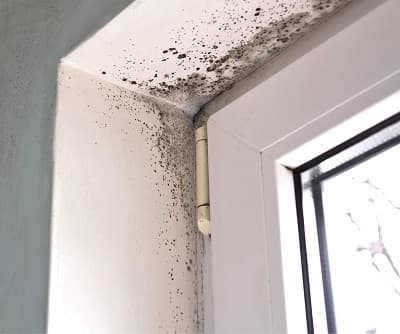
Mold is commonly found in damp and cool areas, like basements and crawlspaces. It’s also prone to grow in areas where flooding, storms, or other severe weather may have caused excessive moisture to be present. This is why mold may grow around leaks in windows, roofs, or pipes that sustain damage during weather or other events. If conditions are favorable, mold may also grow on:
- Wood and paper products
- Cardboard and ceiling tiles
- Carpet
- Fabric
- Upholstery
- Paints
- Wallpaper
- Dust
- Insulation
- Drywall
- The last step is restoration. Depending on the extent of damage, minor or large-scale restoration services may be needed, including construction . It is our goal to return your space to pre-loss condition.
For more information, review our FAQ and Glossary .
Sources:
https://www.merriam-webster.com/dictionary/mold
https://www.itis.gov/servlet/SingleRpt/SingleRpt?search_topic=TSN&search_value=13933#null
https://www.cdc.gov/mold/faqs.htm
https://www.cdc.gov/mold/stachy.htm
https://www.medicalnewstoday.com/articles/323419 https://www.epa.gov/mold/mold-course-chapter-1