
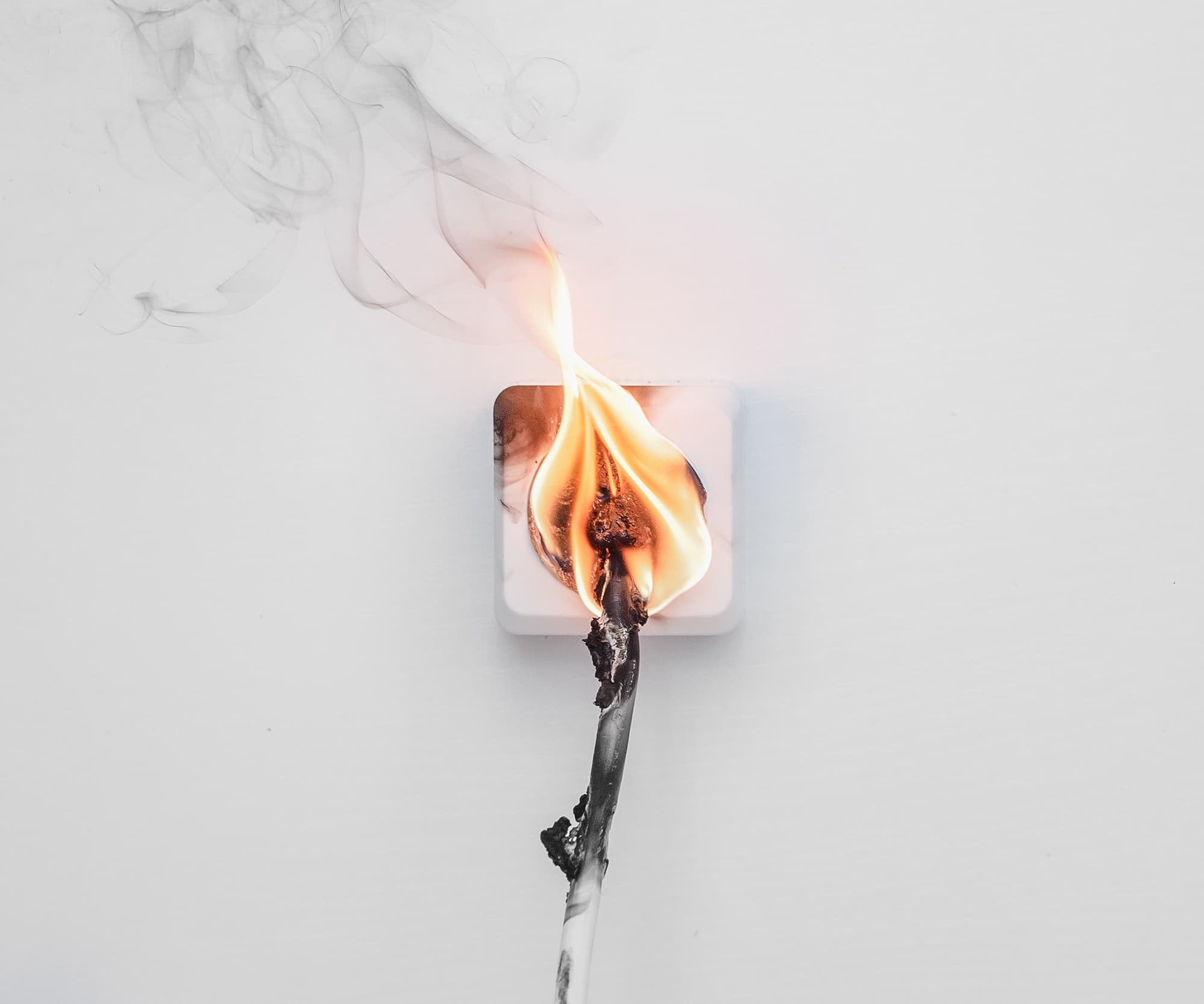
When to Use a Fire Extinguisher
While choosing the right type of fire extinguisher is an important part of fire safety, knowing when to use one is highly important. Fire extinguishers are designed for use on small fires, such as those of paper, wood, fabric, and other combustible materials. It’s important to remember, however, that a fire extinguisher should never be used on an out-of-control fire, as it could put you in danger. If a fire is too chaotic or large for you to handle, leave the area and call the fire department immediately. Your safety is top priority. For more information, review what steps to take after a house fire .
Differences in Fire Extinguishers
Fire extinguishers come in a variety of sizes and types, so it’s important to understand the differences. Per FEMA, there are five primary types of fire extinguishers , labeled “A,” “B,” “C,” “D,” and “K.” These are considered their classes. Please note, most home improvement stores also carry multipurpose fire extinguishers, such as “B-C” or “A-B-C.”
• “A” fire extinguisher. This type of fire extinguisher is a good choice for fires caused by combustible materials such as paper, wood, fabric, and other materials, and commonly found in homes and businesses. Typically, it’s also the most affordable type of fire extinguisher. However, this type is not effective against flammable liquids or electrical fires.
• “B” fire extinguisher. This type of fire extinguisher is best for fires caused by flammable liquids, such as grease, oil, gasoline, and other combustible liquids. Like “A” fire extinguishers, it’s commonly found in homes and businesses.
• “C” fire extinguisher. This type of fire extinguisher is one of the most popular types, as it’s effective against electrical equipment, tools, and other items that may be plugged in. It’s also typically found in homes and businesses.
• “D” fire extinguisher. This type of fire extinguisher is commonly used against flammable metals and is often found in factories.
• “K” fire extinguisher. This type of fire extinguisher helps fight against animal oils, fats used in cooking, and vegetable oils, and is commonly found in industrial kitchens and restaurants.
How to Use a Fire Extinguisher
While you should always make sure you’ve read the instructions in case a fire ever breaks out, here are some tips for using a fire extinguisher safely. Remember, unless you are the person handling the fire extinguisher, make sure everyone else has evacuated the area before use. Additionally, if the fire is not quickly extinguished, evacuate the area, and call the fire department.
A fire extinguisher can be used in four steps, or the “PASS” technique (Pull, Aim, Squeeze, Sweep):
1. Keeping a safe distance from the fire, pull the pin at the top of the fire extinguisher, which will unlock the operating lever.
2. Aim the nozzle at the base of the fire.
3. Squeeze the lever slowly. This will release the extinguishing agent.
4. Move the fire extinguisher in a sweeping motion, moving the nozzle from side to side, until the fire is extinguished.
Fire extinguishers are an important part of fire safety and can help you protect yourself and your family from the dangers of fire. With the right type of fire extinguisher and a little practice, you can keep yourself and your property safe from the dangers of fire.
Resources:
https://www.usfa.fema.gov/prevention/outreach/extinguishers.html